Stock Code: SH600522
-反白-rgyk712mnhczi1sjv2jrz96eetuv1qvfu5h21cx66q.png "中天科技横版版Logo(英文)-反白")
It is a systematic technology that uses specialized cables, which “leak” signals like an antenna, to achieve continuous and uniform wireless coverage inside tunnels.
Conventional 1-5/8" leaky coaxial cables support frequencies only up to 2.7 GHz and cannot accommodate higher 5G bands like 3.5 GHz, limiting multi-operator co-cable upgrade and expansion.
The 4.9 GHz band suffers fast signal attenuation. Complex metro tunnels with obstacles and metal reflections raise higher requirements for radio coverage systems.
For leaky coaxial cables working in ultra-wide bands, coupling and transmission losses vary sharply across frequencies. Inconsistent radiation patterns between low and high frequencies cause uneven coverage. Coupled with cutoff frequency limitations, wideband design and field construction remain challenging.

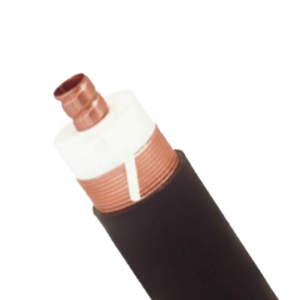
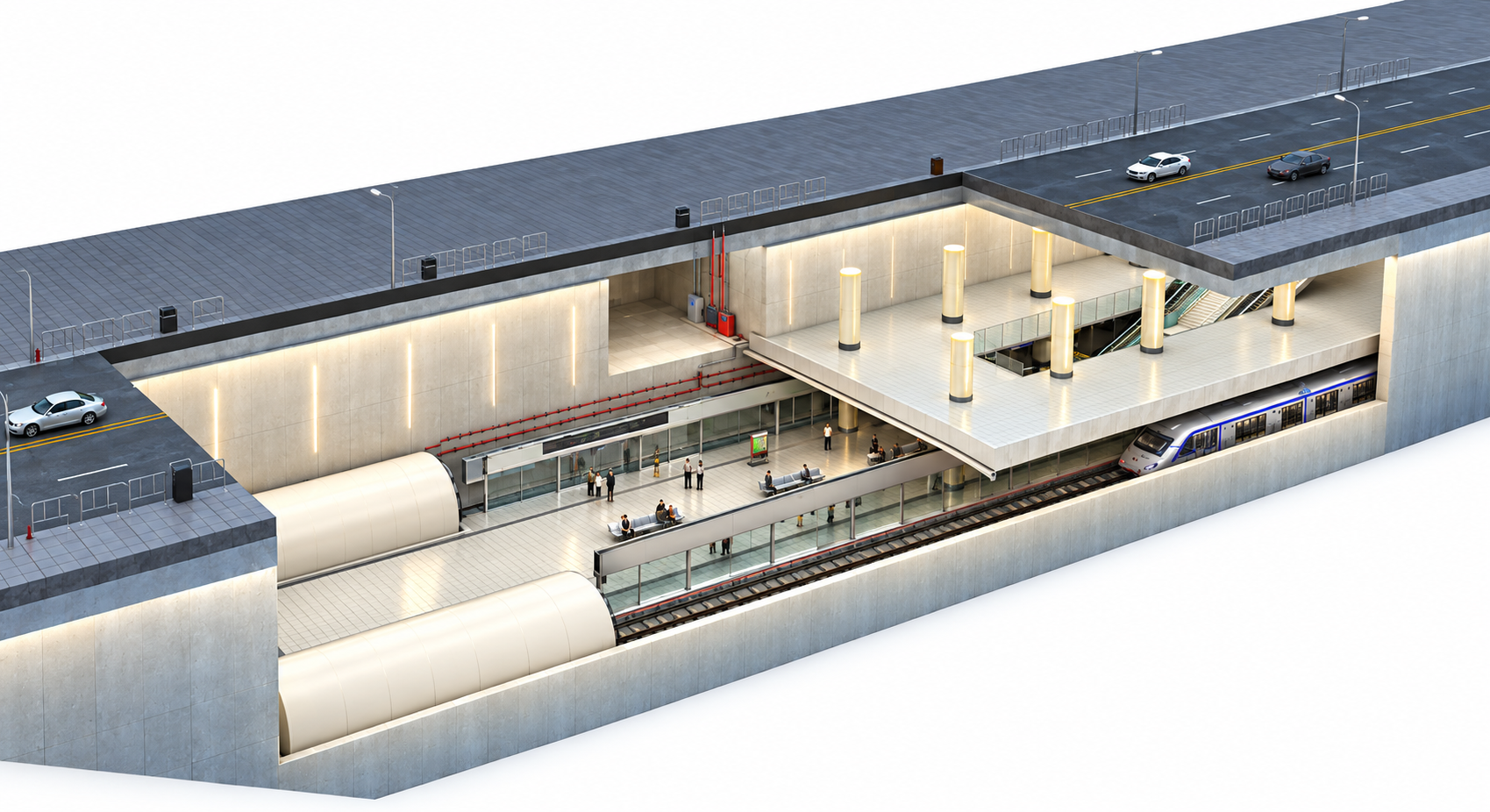
It supports 2/3/4/5G signal coverage for all major telecom operators, as well as private networks including TETRA, GSM-R, 5G-R, LTE-M and LTE-U.
Adopting wideband leaky coaxial cables to support multi-system co-deployment of 2G/4G/5G, it delivers continuous and uniform signal radiation along tunnels, resists wind pressure and vibration, and ensures stable communications for high-speed mobile scenarios of high-speed railways.


As the industry innovator of the 170° ROOMTOP indoor distributed leaky coaxial cable solution, ZTT is the sole strategic partner of China Tower Group for indoor distributed leaky cable deployment. This system delivers advantages including straightforward installation, homogeneous signal coverage and lower capital expenditure.
This is a technical solution characterized by uniform signal coverage with no blind spots, inherent full-band compatibility, and a stable, high-quality transmission rate.
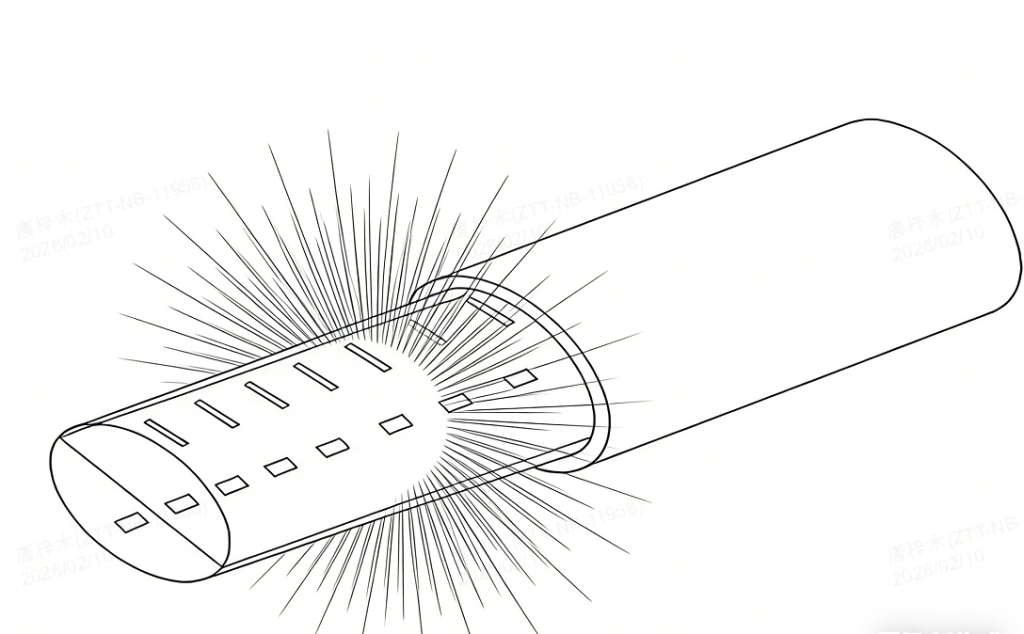
The product achieves breakthrough performance at the physical layer by applying high-purity polarization and multi-stream isolation technology. Its core lies in utilizing a design with high polarization purity and a high cross-polarization ratio to precisely control the polarization state of electromagnetic waves. This effectively separates multiple data streams over the air interface, increasing data transmission rates by 21% to 75% across different frequency bands.
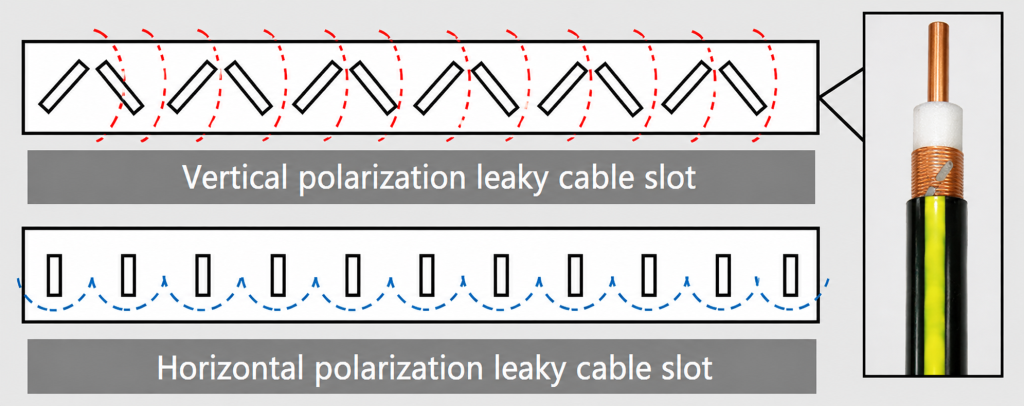
It greatly reduces the project procurement cost compared with traditional copper leaky cables, while maintaining electrical performance, mechanical protection and construction convenience.
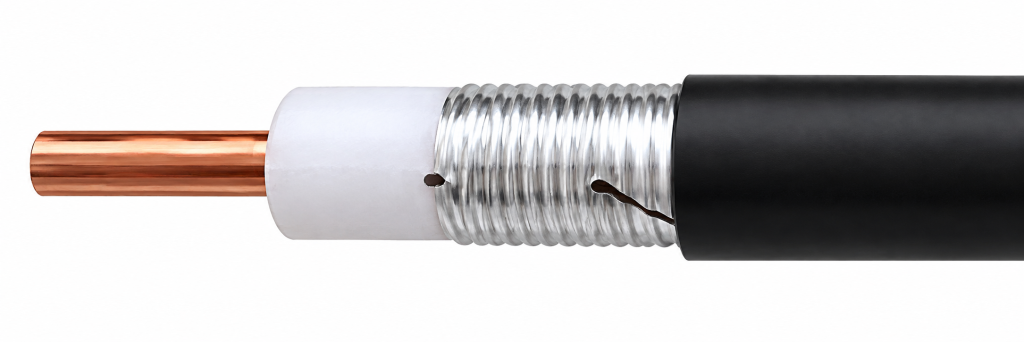
Traditional 1-5/8″ leaky coaxial cables are limited to a maximum operating frequency of 2.7 GHz, failing to support high-frequency 5G bands such as 3.5 GHz. This constraint restricts multi-operator shared cable deployment and subsequent network expansion. This solution enables multi-carrier co-cable transmission, simplifies tunnel communication infrastructure, reduces engineering investment, and reserves sufficient bandwidth capacity for future network upgrades along the HSR line.
The 4.9 GHz band suffers fast signal attenuation, while tunnel obstacles and metal reflections bring tough coverage challenges. ZTT’s solution aims to break through these radio propagation limits, achieving steady 4.9GHz coverage for metro 5G, multi-operator co-use and lower infrastructure costs.
Ultra-wideband leaky coaxial cables face drastic frequency-dependent coupling and transmission loss. Mismatched radiation patterns across low and high bands create patchy coverage, plus cutoff frequency restrictions complicate wideband design and site rollout. ZTT’s solution seeks to break these wideband bottlenecks, delivering consistent full-band radiation, seamless multi-band coverage and streamlined bridge construction.
The 4.9 GHz band suffers fast signal attenuation, while tunnel obstacles and metal reflections bring tough coverage challenges. ZTT’s solution aims to break through these radio propagation limits, achieving steady 4.9GHz coverage for metro 5G, multi-operator co-use and lower infrastructure costs.
Ultra-wideband leaky coaxial cables face drastic frequency-dependent coupling and transmission loss. Mismatched radiation patterns across low and high bands create patchy coverage, plus cutoff frequency restrictions complicate wideband design and site rollout. ZTT’s solution seeks to break these wideband bottlenecks, delivering consistent full-band radiation, seamless multi-band coverage and streamlined bridge construction.
-反白-1024x290.png)
Connecting the World
Powering the Future
Products
Quick Link